
 Free Delivery & Return
 365-Day Returns
 500,000 Products in Stock
 10 Million Happy Customers

Outdoor Furniture (2.386)


Outdoor Furniture
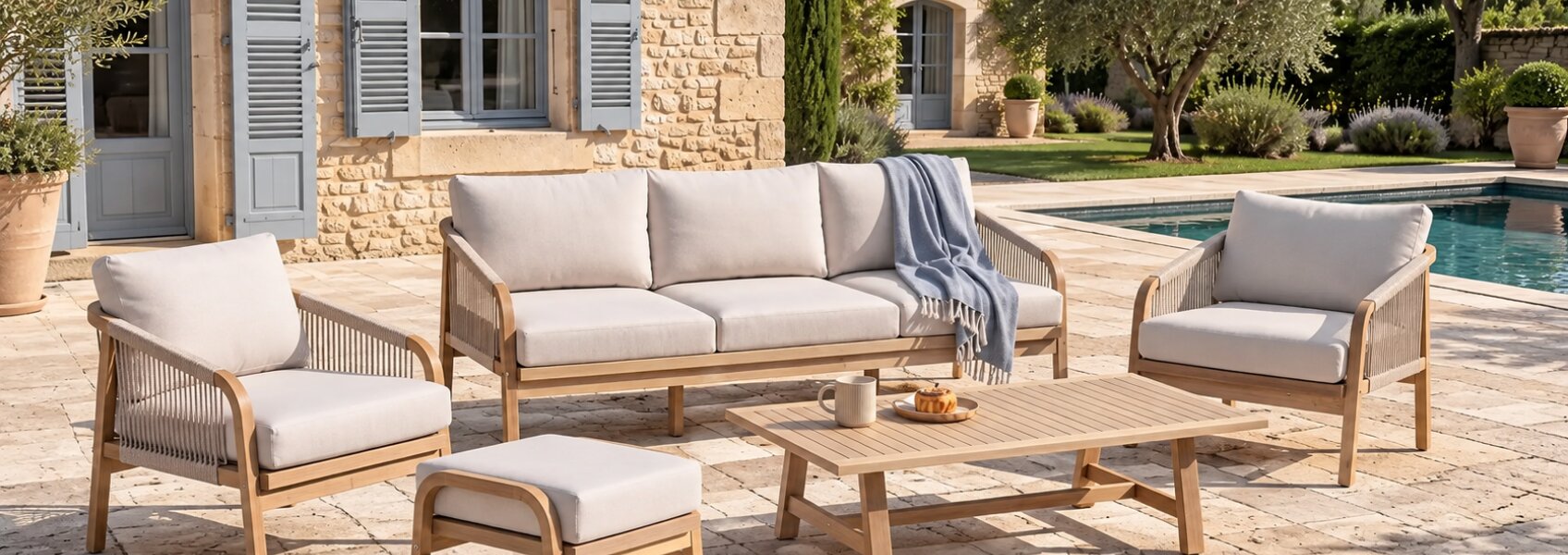
The right outdoor furniture depends less on the size of the space and more on what it needs to survive: sun, rain, wind or all three. A dining set built for a sheltered balcony will not hold up on an exposed patio, and a lounge set chosen for looks alone can start fading within a season. This page covers which pieces suit which spaces, and which materials actually last outdoors.
What furniture do you actually need for your outdoor space?
The right pieces depend on how the space gets used, not just how large it is. A small balcony rarely needs a full dining set, while a large garden used for entertaining benefits from separate zones for dining and lounging rather than one oversized set.
Dining sets
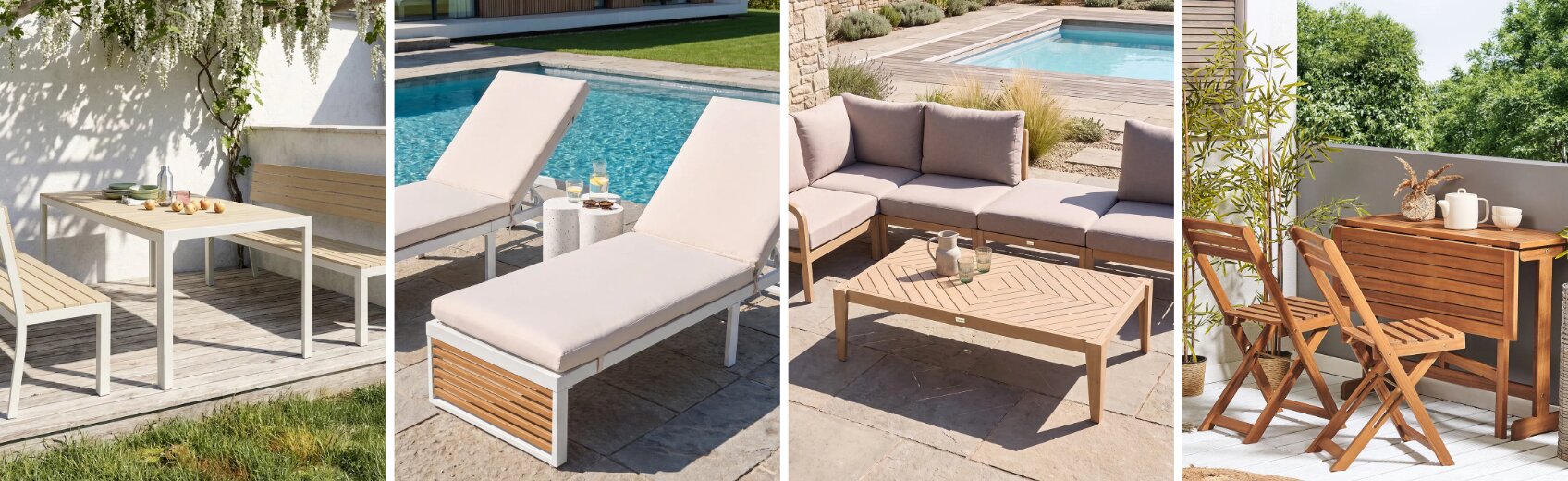
Outdoor dining sets range from compact 2-seat sets for balconies to large sets seating 8 or more for gardens used for regular entertaining. A set built for daily use benefits from a weatherproof tabletop, since a table left outdoors gets far more exposure than the chairs, which can often be stacked or covered separately.
Shop all: outdoor dining sets
Loungers and daybeds
Sun loungers and patio daybeds work best where there is enough open ground for the frame to sit flat and recline fully, so they suit larger gardens and poolside spots more than tight balconies. Look for a reclining backrest with at least three positions and a frame that will not sink into soft lawn.
Shop all: sun loungers and patio daybeds
Lounge sets and outdoor sofas
Corner sofas and modular lounge sets create a defined seating area for relaxing or entertaining, and modular designs let you reconfigure the layout as the space or the guest count changes. These sets need more floor space than a dining set of the same seat count, since low-slung lounge seating sits wider per person.
Shop all: lounge sets and outdoor sofas
Balcony furniture
Balcony sets pair a small table with two to four chairs, often in folding or stacking designs that free up space when not in use. This scale also suits compact patios and courtyards, not only balconies, wherever floor space is limited.
Shop all: balcony furniture
Extra pieces worth considering
- Garden storage keeps cushions, tools and seasonal items dry and out of the way, and it is worth sizing to fit your largest cushion set rather than buying on looks alone.
- Garden swings add a relaxed seating option that does not compete for the same floor space as a lounge set, since most stand on their own frame.
- Outdoor pouffes give you flexible extra seating or a footrest, and their light weight makes them easy to move between a dining area and a lounge area as needed.
- Gazebos and pergolas create shade and shelter, which also protects any furniture placed underneath from direct UV exposure and rain.
Shop now: garden storage and garden swings
What makes outdoor furniture last?
Four properties separate furniture that survives outdoors for years from furniture that fades or fails within a season. These apply across materials, so it's worth checking for them regardless of which material you're considering.
UV resistance
Stops colour fading and surface degradation from constant sun exposure. Built into the material itself in HDPE rattan and powder coatings, rather than a coating that wears off.
Weather protection
Lets furniture handle rain, wind and temperature swings across seasons without warping or weakening, so it can stay outside year-round rather than needing to be stored.
Moisture resistance
Repels rain and damp rather than absorbing it, which is what separates HDPE rattan from natural rattan outdoors: natural fibres swell and can develop mould if left wet.
Rust resistance
Keeps metal frames strong where humidity and moisture would otherwise corrode them. Aluminium resists this naturally; steel needs a powder coating to match it.
Which material works best for daily outdoor use?
Material is the single biggest factor in how long outdoor furniture lasts and how much upkeep it needs. The table below compares the main options against the factors that actually matter: sun and rain resistance, typical lifespan outdoors, and how much maintenance each one asks for.
| Material | Best suited to | Typical outdoor lifespan | Maintenance |
|---|---|---|---|
| HDPE synthetic rattan | Full sun and rain exposure, year-round outdoor use | 10-20 years | Low – wipe clean, no covering needed |
| Natural rattan | Covered balconies, sunrooms, sheltered patios | Shorter outdoors unless kept dry and shaded | High – needs cover from rain and direct sun |
| Aluminium | Modern layouts, coastal or humid climates | Long-lasting, naturally rust-resistant | Low – lightweight, easy to move and clean |
| Steel | Windy, exposed spots needing a heavier, stable frame | Long-lasting when powder-coated | Medium – coating needs checking for chips over time |
| Natural wood | Classic or rustic garden and patio settings | Long-lasting with regular treatment | Medium to high – periodic oiling or sealing |
| Concrete | Windy or open spaces needing a stable, permanent piece | Very long-lasting | Low – mostly wipe-down cleaning |
Rattan: natural vs synthetic
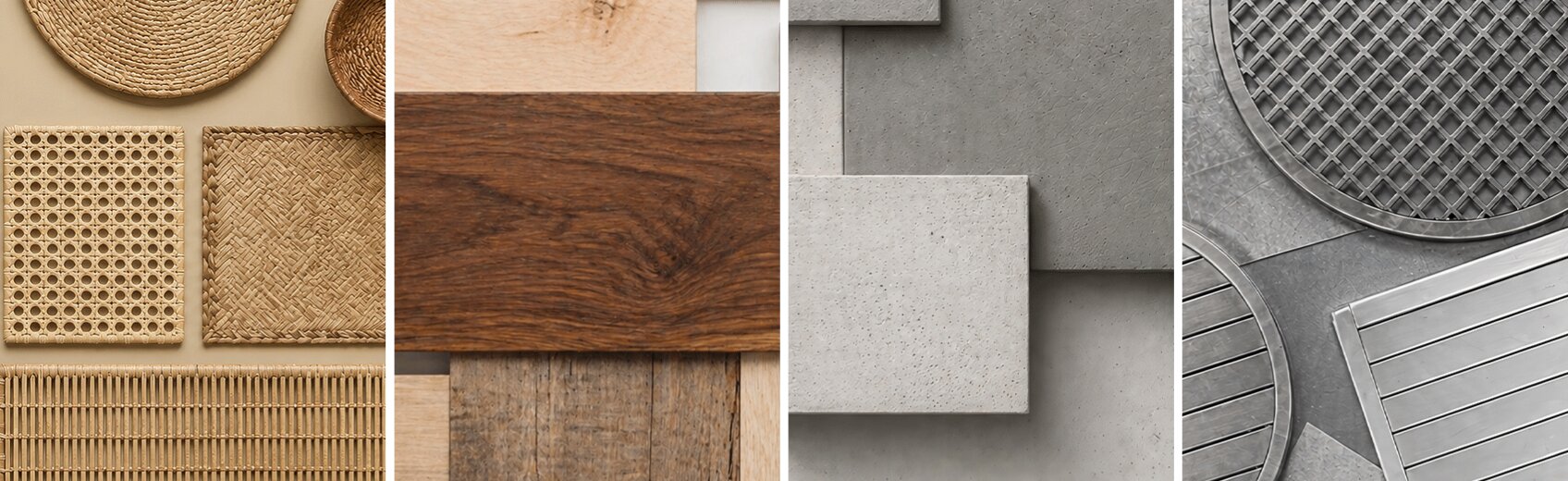
Natural rattan has a warm, woven texture that suits covered patios and sunrooms, but it absorbs moisture and should not be left in full sun and rain year-round. HDPE (high-density polyethylene) synthetic rattan is built to solve exactly this problem: the UV stabiliser is mixed through the strand itself, so it resists fading and stays flexible outdoors for 10 to 20 years.
Discover more: rattan outdoor furniture
Why the resin quality matters more than the look
Synthetic rattan is sold in several resin grades that all look similar in a photo but perform very differently outdoors. HDPE holds colour and flexibility for a decade or more, while cheaper PVC-based alternatives can turn brittle and crack within a few seasons of full sun exposure. It's worth checking which resin a set uses before buying it for a fully exposed spot.
Aluminium and steel
Aluminium is light enough to reposition easily and resists rust naturally, which makes it a strong choice for coastal gardens and modern, minimal layouts. Steel is heavier and holds its ground better in wind, so it suits large dining sets that stay in one fixed spot rather than furniture you plan to move around.
Discover more: aluminium outdoor furniture
Why aluminium doesn't need the coating to stay rust-free
A scratch on a powder-coated steel frame exposes bare metal underneath, which is where rust starts. A scratch on aluminium exposes more aluminium, and the metal forms its own thin oxide layer on contact with air that keeps protecting it. That's why aluminium furniture keeps resisting corrosion even after years of knocks, while steel depends entirely on the coating staying intact.
Natural wood
Natural wood brings a classic or rustic look that synthetic materials do not fully replicate, and it works well in gardens and patios of any size. It needs more upkeep than metal or synthetic rattan, typically an oil or sealant reapplied periodically to stop the surface drying out and greying.
Discover more: wooden outdoor furniture
That grey, weathered look isn't a fault
Left untreated, hardwoods like teak naturally weather to a silver-grey patina as sun and moisture oxidise the surface. It's purely cosmetic and doesn't weaken the wood, so it's a look you can choose to embrace rather than a sign the furniture needs replacing. Regular oiling keeps the original golden tone instead, if that's the look you'd rather keep.
Synthetic materials and concrete
Moulded synthetic furniture is easy to clean and available in a wide range of colours and shapes, making it a practical option for busy households that want low upkeep. Concrete furniture takes this further on stability: its weight makes it well suited to windy or fully open spaces where lighter pieces might shift.
Discover more: concrete outdoor furniture
One-piece moulding means nothing to work loose
A single-mould plastic chair has no screws, joints or welds to fail over time, unlike furniture built from separate fastened parts. Concrete has the opposite trade-off: its strength comes from mass rather than a single mould, but the surface is porous, so it benefits from a sealant to stop it absorbing stains and moisture.
What to check before buying outdoor furniture
Once you have chosen a material and a set of pieces, run through these checks before buying.
- Confirm the frame material suits full sun and rain if the spot has no cover
- Check whether cushions are quick-dry outdoor fabric or need to be stored indoors
- Measure the space with the furniture's actual footprint, not just seat count
- For balconies, check whether pieces fold or stack for easier storage
- For synthetic rattan, check the resin type rather than assuming all "rattan-look" sets perform the same
- For metal frames, confirm the finish is powder-coated rather than just painted
Frequently asked questions
What is the most durable material for outdoor furniture?
Powder-coated aluminium and HDPE (high-density polyethylene) synthetic rattan are the most durable choices, both able to stay outdoors year-round for 10 to 20 years without cracking or rusting. Natural wood and natural rattan need more maintenance or seasonal cover to last as long.
Can rattan garden furniture stay outside all year?
Natural rattan should not stay outside unprotected all year, as it absorbs moisture and degrades in rain and direct sun. HDPE synthetic rattan is built for permanent outdoor use and does not need to be covered or stored.
Is aluminium or steel better for garden furniture?
Aluminium is lighter, naturally rust-resistant and easier to reposition, making it the better choice for most gardens and balconies. Steel is heavier and more resistant to wind, so it suits large, fixed dining sets in exposed spots.
How do I stop outdoor furniture from fading in the sun?
Choose materials with built-in UV stabilisers, such as HDPE rattan or powder-coated aluminium, rather than untreated wood or basic PVC. A breathable outdoor cover during the sunniest months also slows colour fade on any material.
What size outdoor dining set fits a small balcony?
A 2-4 seat balcony set with a compact table, rather than a large dining set, is the right scale for most balconies and small patios. Folding or stacking designs are worth prioritising if the space also needs to be used for other things.
Do I need to bring garden furniture cushions inside in winter?
Yes, fabric cushions should be brought inside or stored in a weatherproof box over winter, even if the frame itself is left outdoors. Quick-dry outdoor fabric can stay out longer than standard upholstery but still lasts longer with winter cover.
Looking for inspiration? Browse our garden trends guide
 * All prices incl. VAT and incl. shipping cost