Free Delivery & Return
 365-Day Returns
 500,000 Products in Stock
 10 Million Happy Customers


Side Tables


Side Tables
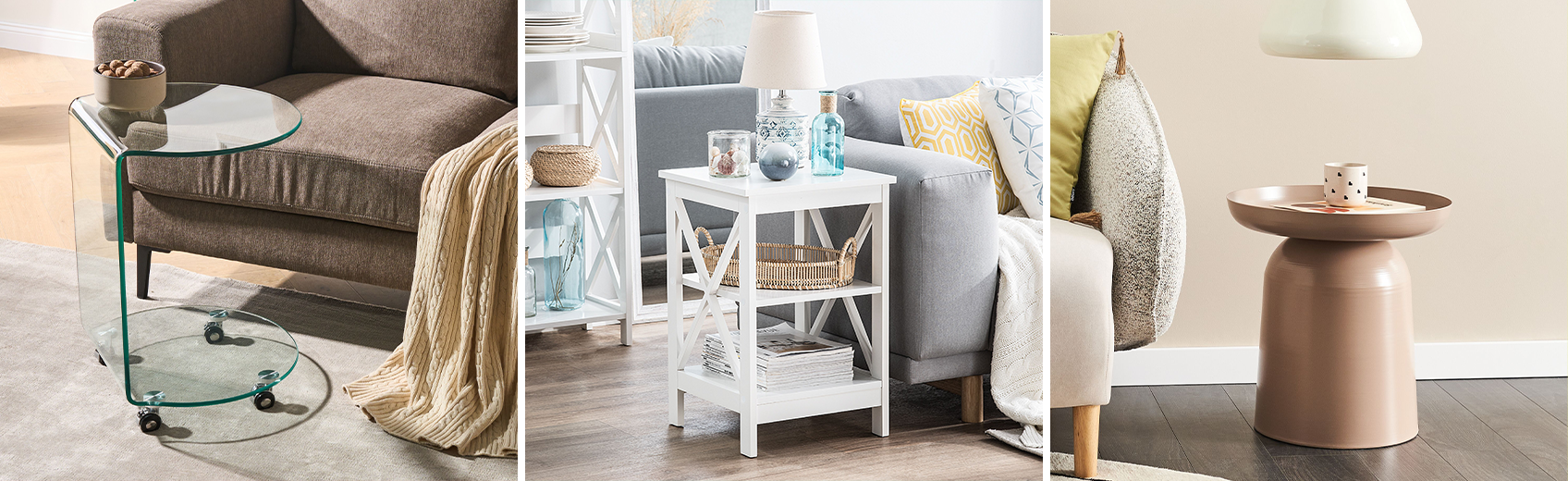
A side table is an often-overlooked piece of furniture, yet it can make a significant difference in a room's feel. Whether you use it as a cosy corner for reading, a handy extra surface, or simply as a decorative accent, the right side table should combine practicality with style, adding the perfect finishing touch to your space.
How to choose the size of a side table?
The size of a side table should be both functional and visually appealing. Adjust it to the space you want to put it in.
Measurements
The table’s height should be roughly the same as the armrest of the sofa or armchair next to it, or within a few centimetres, to make it easily accessible. Ensure that the width and depth are proportionate to the rest of the room’s furniture. It should be wide enough to hold essentials like a lamp, with the depth matching the piece it’s placed beside.
Spacing
To avoid overcrowding, leave a few centimetres of space between the furniture and the side table. In high-traffic areas, aim for 30 to 45 cm of walking space around the table.
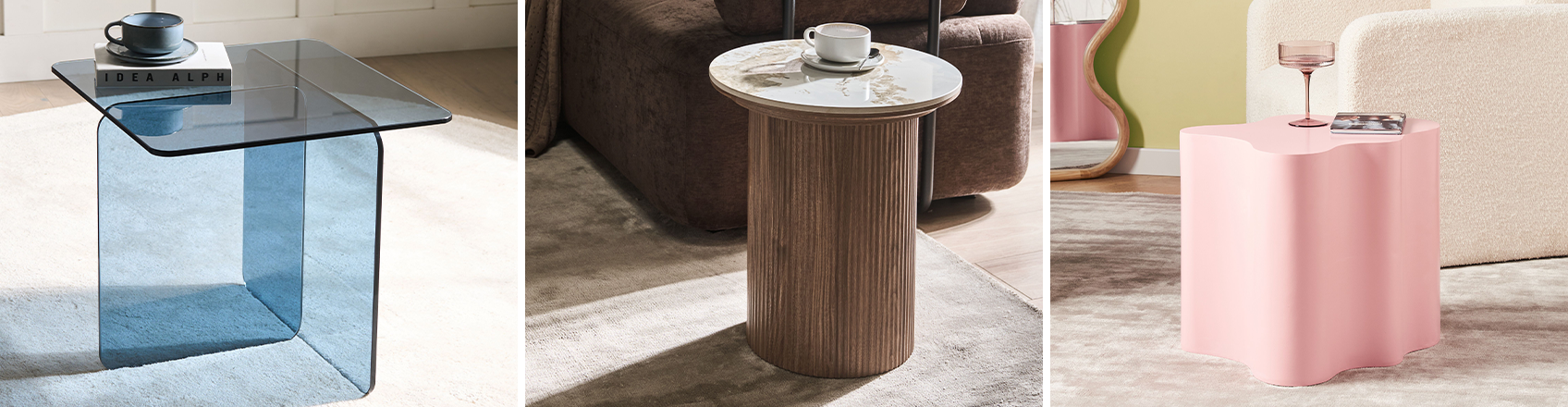
What is the right shape of the side table?
The shape of a side table should complement the layout of your space.
Round and oval
These shapes are perfect for softening the sharp lines of angular furniture, balancing the overall look. They are also suitable for tight corners or areas with heavy foot traffic, as they lack sharp edges.
Square and rectangular
These classic shapes are ideal for most living rooms, offering the most functional surface area and often featuring added storage, such as drawers or lower shelves. Their clean, streamlined design fits perfectly in corners or alongside symmetrical furniture arrangements, sectionals, and traditional room layouts.
Irregular
Tables featuring unconventional tabletops, wide legs or geometric bases are perfect for making a statement. These pieces are more about style than practicality. When placed thoughtfully, they can bring out the personality of a room and elevate the overall look.
What materials should you consider for a side table?
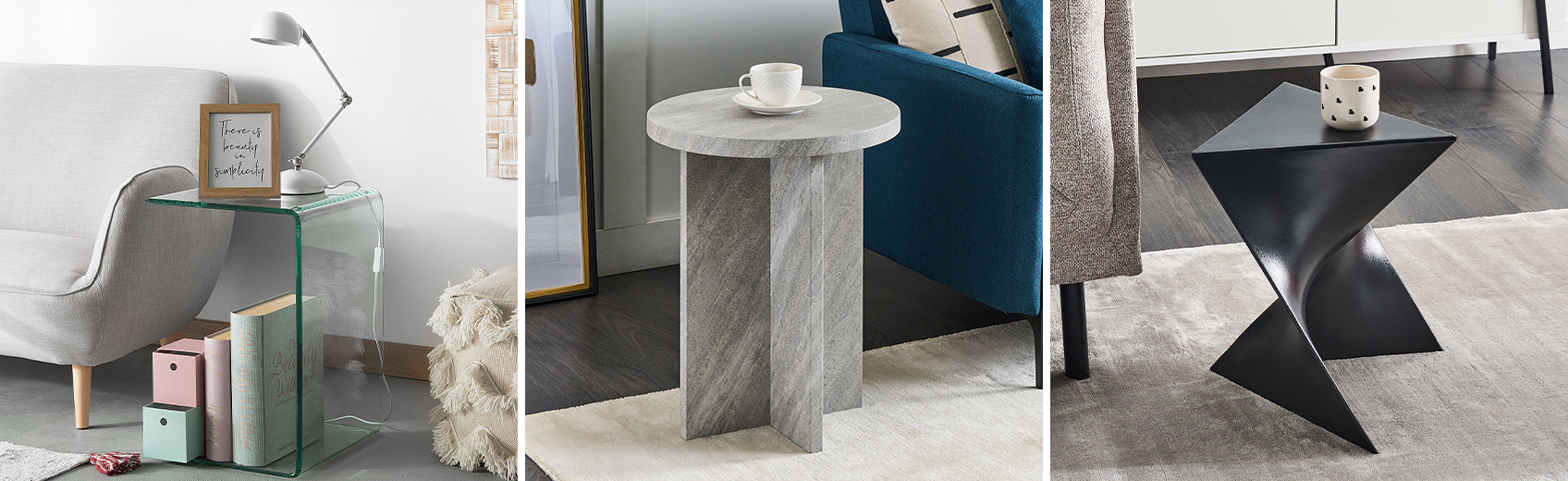
The material of your side table should reflect both its intended use and the style of your space. Below are some popular choices:
Solid wood and wood-like materials
Tables crafted from natural wood, such as mango, teak, pine, or acacia, are a timeless choice, known for their durability and strength. If you're looking for more budget-friendly alternatives, tables made from wood-like materials like MDF offer a similar high-end look, but are lighter and easier to maintain and move around.
Metal
Metal side tables, crafted from durable iron or steel, offer the same lasting strength as wooden ones but are lighter and require less upkeep. With glass or wooden tops, they are ideal for modern or industrial interiors.
Glass
Perfect for smaller rooms, glass tables bring a light, airy feel to your space with their transparent surface, helping the room feel less cluttered. Their minimalist aesthetic makes them a striking piece in modern interiors.