
 Free Delivery & Return
 365-Day Returns
 500,000 Products in Stock
 10 Million Happy Customers
Rustic Style: Warm, Natural Furniture for a Cosier Home
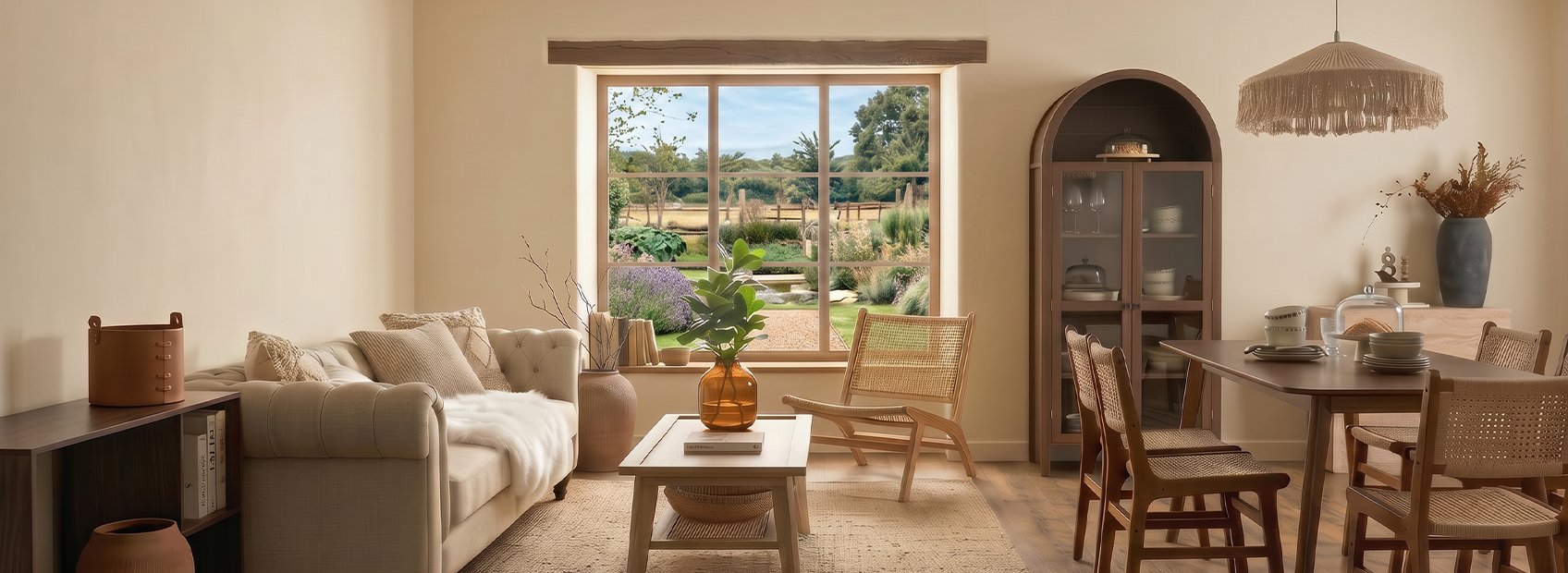
Rustic style is about rough edges, natural materials and rooms that feel like they've been put together slowly over the years. No shine, no showing off - just comfortable pieces you'll want to come home to.
What are the key characteristics of rustic style?
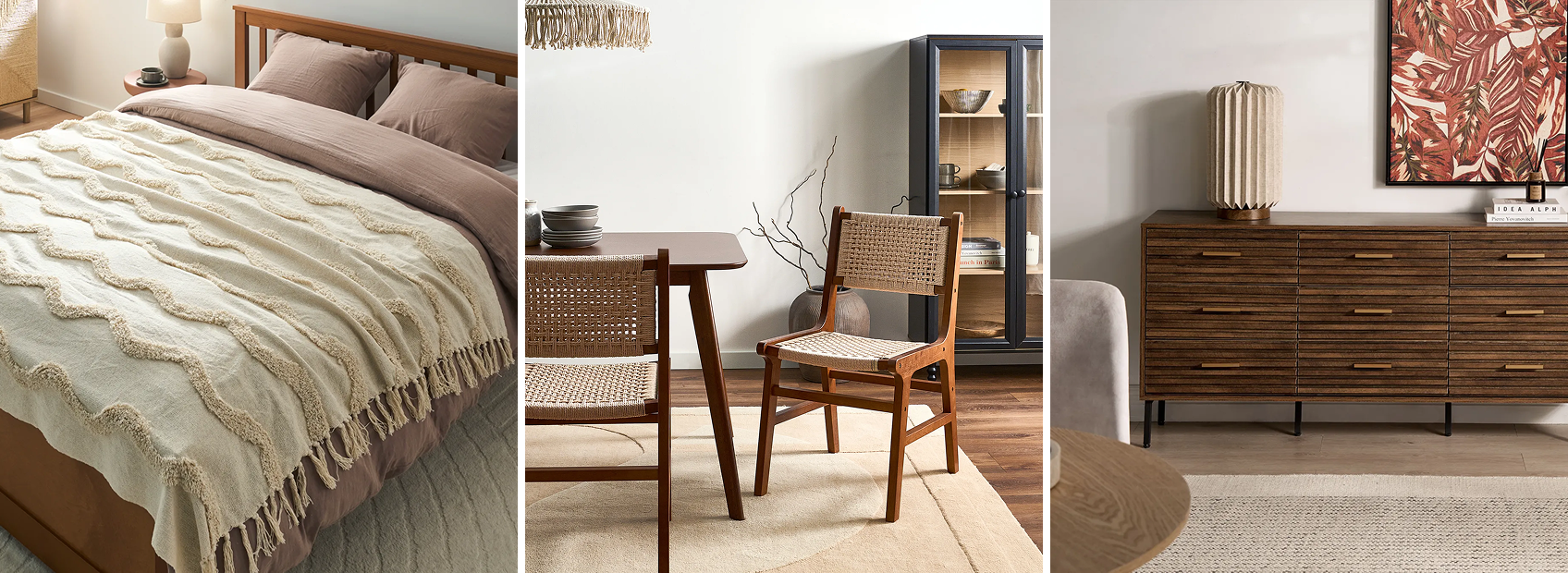
Rustic style is less a strict rulebook and more a general mood. If a space feels unpretentious, uses natural materials, and looks like it was put together by hand rather than picked straight off a factory line, you're in the right territory.
That said, certain features characterise the rustic style:
- Natural materials: solid wood, stone, linen, wool, jute, clay. Nothing plastic or glossy, nothing pretending to be something it isn't.
- Rough and aged: visible grain, knots, chips, patina, and the marks of use are the whole point. A brand-new piece can still look rustic if it's been properly distressed.
- Handmade feel: slight wonkiness, uneven edges, hand-stitched seams. The piece doesn't necessarily have to be handmade, but it sure should look like a person made it, not a machine.
- Matt, never shiny: high-gloss finishes, chrome, and mirror-polished are a no-go. Surfaces should be flat, soft, and visually dry.
What is the colour palette of rustic-style furniture?
Think of a walk through the woods in autumn. Rustic colours are pulled straight from nature - earthy, muted, and easy to live with. They sit in two loose groups:
- The quiet base: white, cream, warm grey, and beige do most of the work on walls, larger upholstery, and bedding. They keep a room feeling light and stop the wood tones from getting heavy.
- The earthy layer: mossy green, olive, deep red, warm brown, gold, tan, and sand beige come in through cushions, rugs, art and smaller accessories. Pale blue works beautifully alongside them if you want to lighten the mood.
What materials should you look for?
Rustic rooms work because of the contrast between soft and coarse. Feel free to combine the materials below. And remember: the more variety in texture, the more interesting the space gets.
Wood
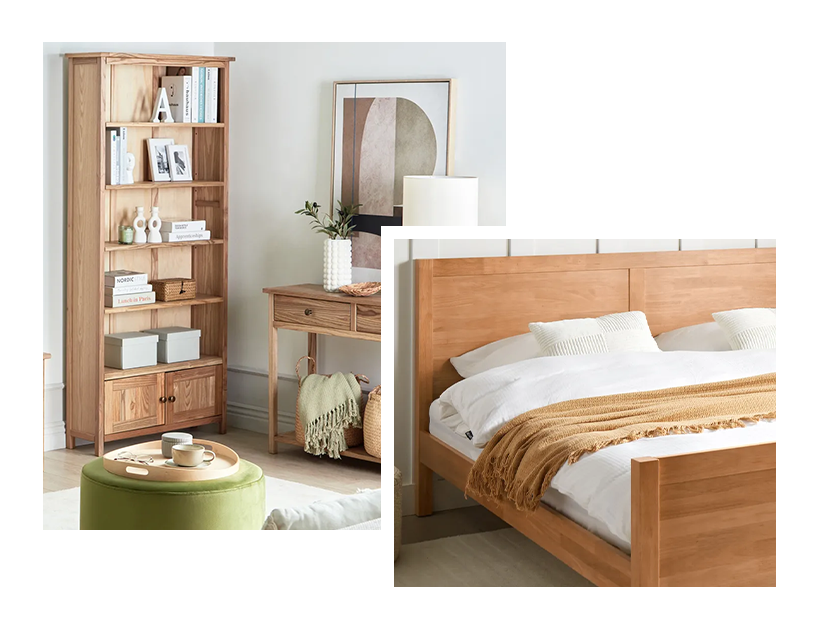
Wood is the backbone of any rustic interior and go-to for the big anchor pieces: bed frames with chunky headboards, thick-topped dining and coffee tables, sideboards, open shelving and storage units. Oak, pine, acacia and reclaimed timber are all solid choices, but the key thing is visible grain - look for pieces where you can see the natural texture of wood. If the surface has been smoothed and lacquered to a shine, it's lost its rustic character.
Wood
Wood is the backbone of any rustic interior and go-to for the big anchor pieces: bed frames with chunky headboards, thick-topped dining and coffee tables, sideboards, open shelving and storage units. Oak, pine, acacia and reclaimed timber are all solid choices, but the key thing is visible grain - look for pieces where you can see the natural texture of wood. If the surface has been smoothed and lacquered to a shine, it's lost its rustic character.
Stone and ceramics
Slate, terracotta, stoneware and unglazed ceramics bring a cool, grounded weight that balances out all the warm wood tones. These materials have an honest, earthy quality - they look like they came out of the ground, which is exactly the point. You'll find them mostly in accessories and smaller accent pieces like stoneware jugs and vases, terracotta plant pots and ceramic bowls.
Stone and ceramics
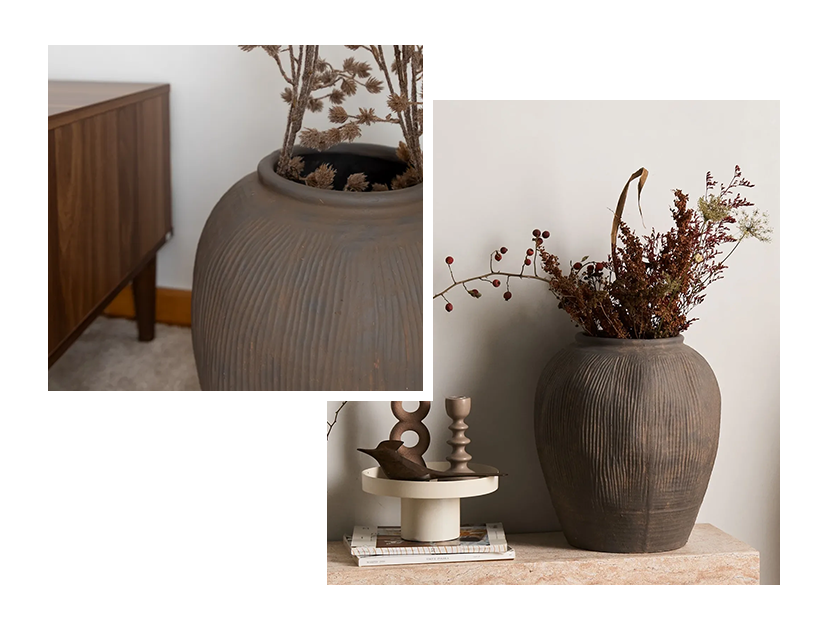
Slate, terracotta, stoneware and unglazed ceramics bring a cool, grounded weight that balances out all the warm wood tones. These materials have an honest, earthy quality - they look like they came out of the ground, which is exactly the point. You'll find them mostly in accessories and smaller accent pieces like stoneware jugs and vases, terracotta plant pots and ceramic bowls.
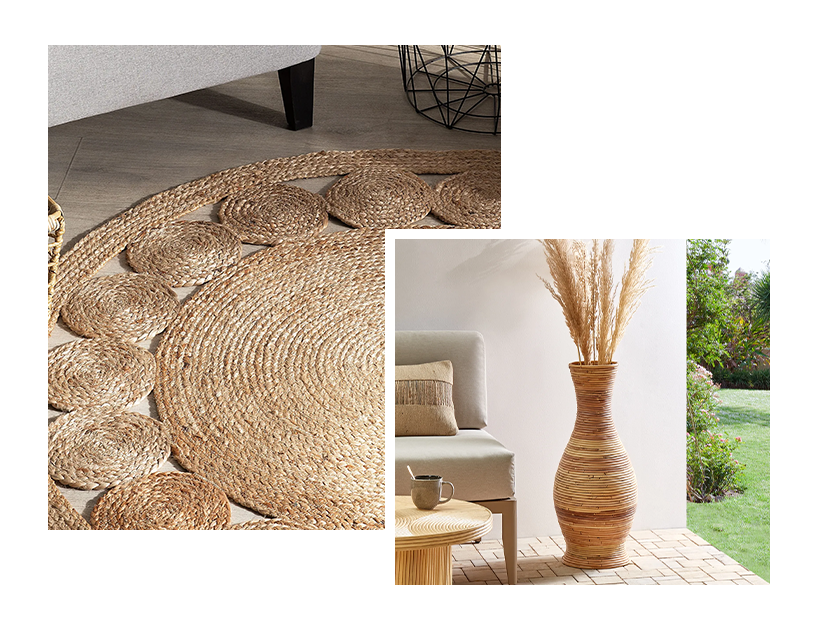
Natural fibres
Linen, wool, cotton, jute, hemp, rattan and wicker - these are the materials that make a rustic room feel soft and lived-in rather than cold and bare. Layer them generously, because contrast is what makes the look work: a linen sofa cover against a wool throw, a jute rug on a stone floor, wicker baskets on a wooden shelf.
Natural fibres
Linen, wool, cotton, jute, hemp, rattan and wicker - these are the materials that make a rustic room feel soft and lived-in rather than cold and bare. Layer them generously, because contrast is what makes the look work: a linen sofa cover against a wool throw, a jute rug on a stone floor, wicker baskets on a wooden shelf.
Metal
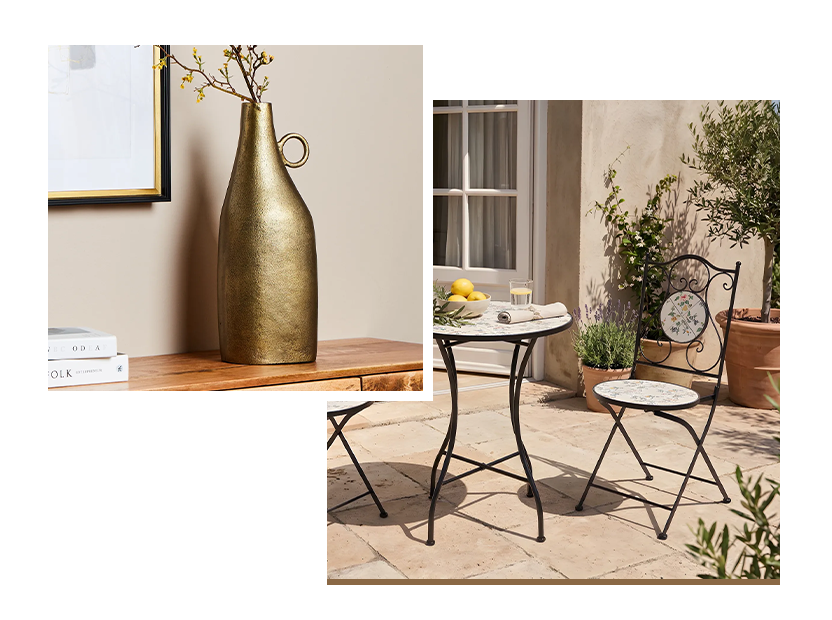
Metal works well in rustic interiors, but only the right kind: black iron, aged brass, hammered copper. If the piece has a matte, slightly worn quality, it fits the overall mood. Skip chrome, polished finishes and anything that reflects light like a mirror. Visible hinges and iron handles on a wooden sideboard or dresser are a classic rustic detail. You can also look for metal accessories, like decorative vases.
Metal
Metal works well in rustic interiors, but only the right kind: black iron, aged brass, hammered copper. If the piece has a matte, slightly worn quality, it fits the overall mood. Skip chrome, polished finishes and anything that reflects light like a mirror. Visible hinges and iron handles on a wooden sideboard or dresser are a classic rustic detail. You can also look for metal accessories, like decorative vases.
Leather
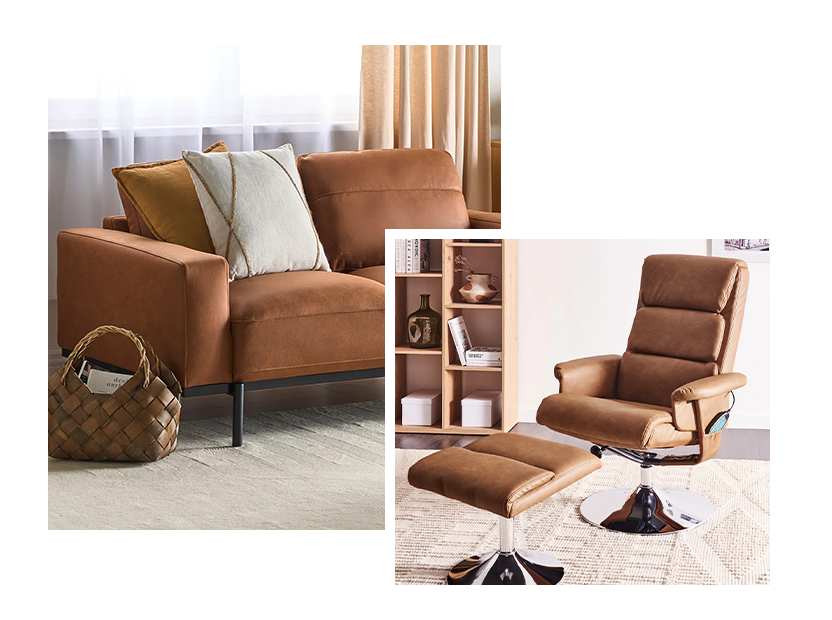
Leather brings warmth and character, but it should look like it's been sat on for a few years, not just unwrapped from the box. It works best on seating: deep armchairs, club chairs, pouffes and dining chais. The beauty of leather in a rustic context is that it actually improves with age, picking up beautiful patina that only adds to the look. If you like the aesthetic but prefer to avoid animal products, vegan leather is a solid alternative - it won't develop that same aged quality, but it still gives you the texture and tone you're after.
Leather
Leather brings warmth and character, but it should look like it's been sat on for a few years, not just unwrapped from the box. It works best on seating: deep armchairs, club chairs, pouffes and dining chais. The beauty of leather in a rustic context is that it actually improves with age, picking up beautiful patina that only adds to the look. If you like the aesthetic but prefer to avoid animal products, vegan leather is a solid alternative - it won't develop that same aged quality, but it still gives you the texture and tone you're after.
How to spot a genuine rustic piece?
Not everything labelled "rustic" actually is, especially since it's often similar to other interior styles. A genuine rustic piece usually shows signs of real craftsmanship and natural materials. When you're shopping, these are the giveaways:
Solid wood, not veneer
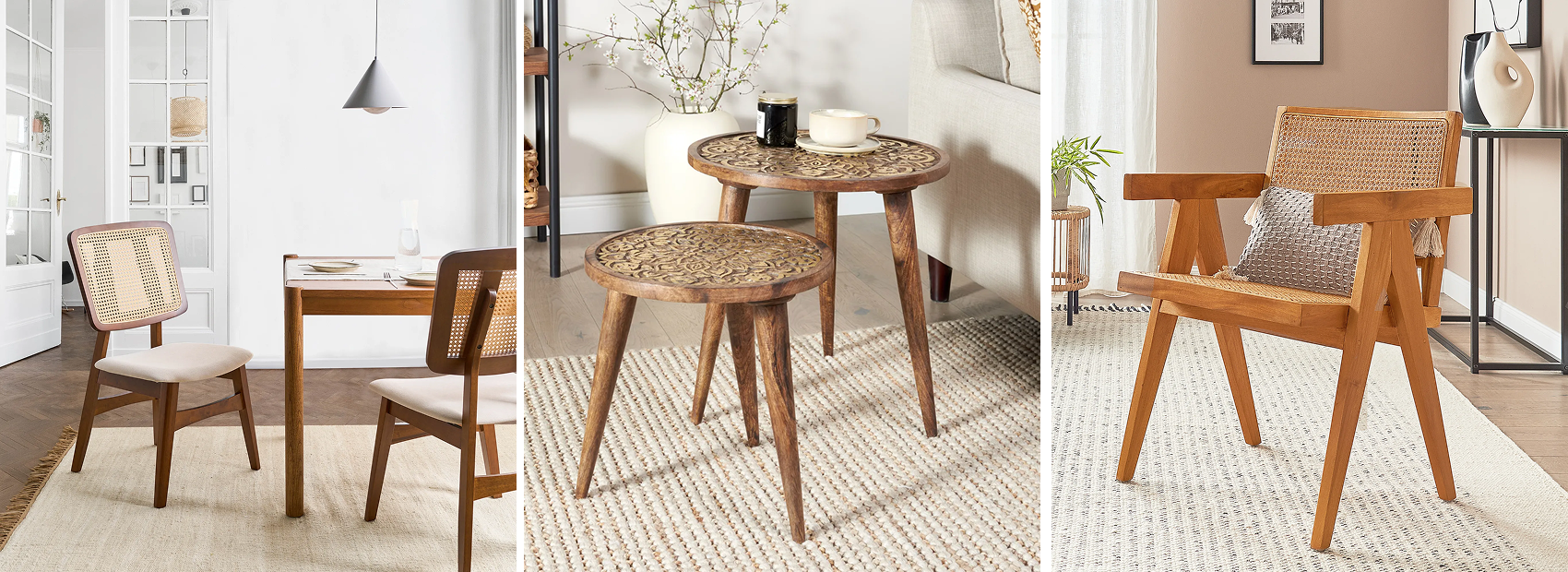
Real rustic pieces are made of solid wood that shows beautiful natural grain. They are also noticeably heavy; a genuine reclaimed oak coffee table takes two people to move, not one finger to slide across the floor. On the other hand, veneer is a thin sheet of wood glued over chipboard or MDF, and you can usually spot it where it meets a corner or an edge. Veneer isn't bad furniture (it actually has lots of advantages), it just doesn't feel 100% rustic.
Matt or oiled finish
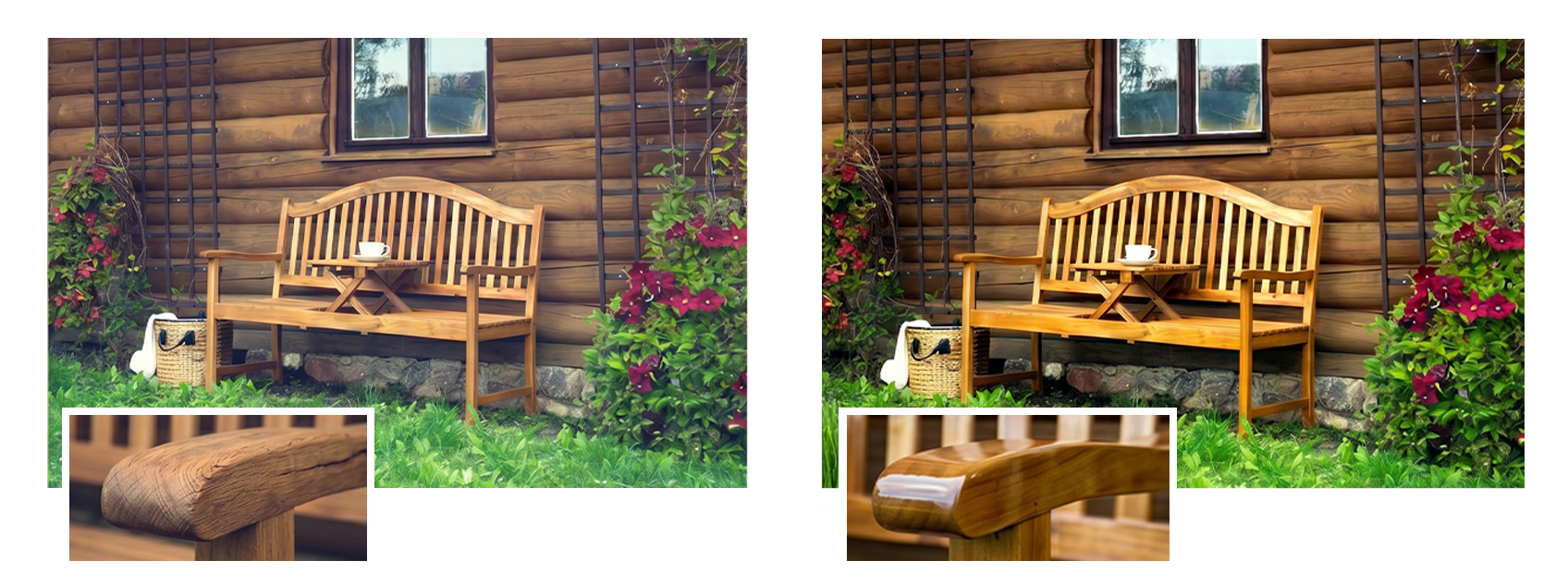
Genuine rustic furniture is finished with light wax, natural oil or nothing at all. You should be able to feel the grain with your fingertips - the surface has texture, not a sealed, glassy smoothness. A heavy lacquer creates a reflective sheen that kills the raw, organic quality rustic pieces depend on. If light bounces off the tabletop, it's been over-finished. Matte and satin finishes absorb light and let the natural colour variation of the wood come through, which is a big part of what makes rustic furniture feel warm and approachable.
Imperfections on purpose
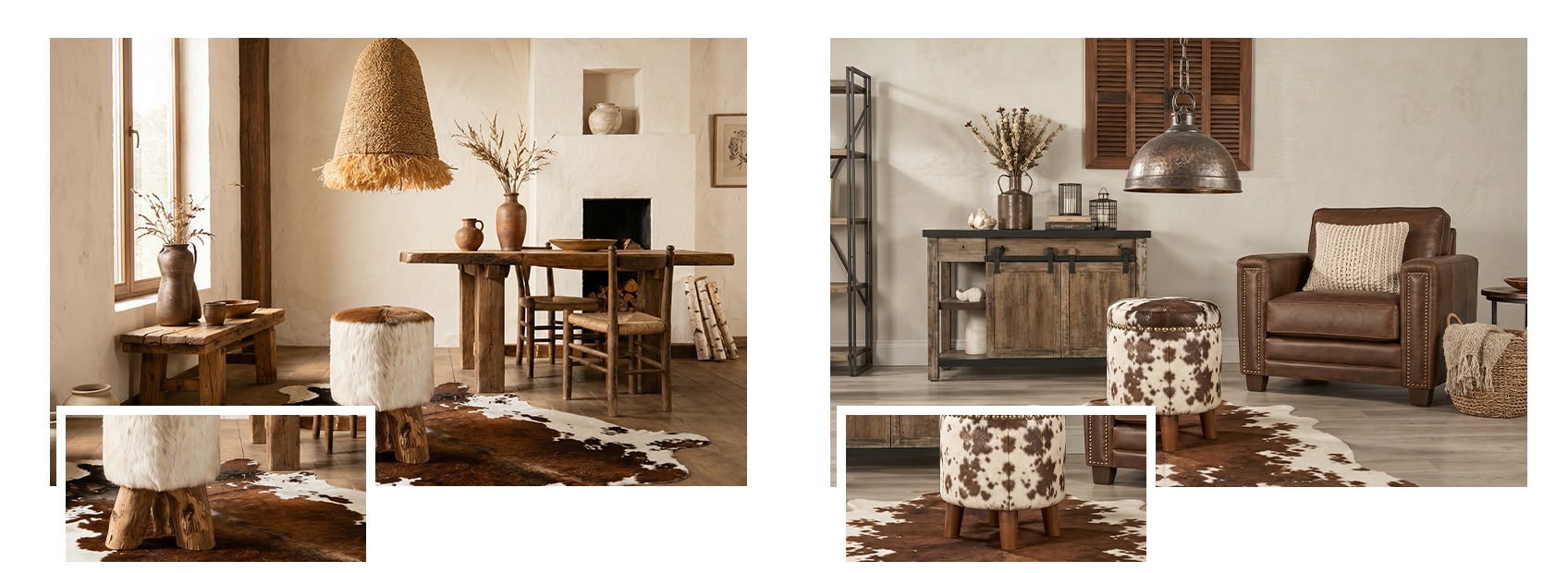
Rustic furniture wears its history openly: knots, cracks, colour variation between planks, rough patches, and the odd uneven edge. These marks are features, not defects. They are evidence that the wood was once a living thing and that a person shaped it into furniture. Be careful, though, so that the distressed effect doesn't feel too artificial, like it follows a pattern - real ageing is random.
Does rustic furniture have to be expensive?
Not necessarily. While high-quality solid wood furniture can be an investment, there are plenty of ways to get the rustic look without overspending.
You can:
- Mix new pieces with second-hand finds.
- Look for reclaimed or upcycled furniture.
- Choose simpler designs without unnecessary detailing.
- Go for affordable wood types, such as pine or ash, rather than more premium hardwoods.
Learn more: how to transform your home on a budget
What other styles pair well with rustic?

Rustic is like that quiet teenager sitting in the back row of the classroom when he finally goes to a party - surprisingly sociable. Mix it sensibly with one or two other styles, and you'll avoid the themed log-cabin look. Go for:
- Scandi: pale woods, clean shapes and plenty of white calm down heavier rustic pieces. A popular, forgiving combination for anyone starting out.
- Industrial: black metal, exposed brick and concrete give rustic warmth a bit of edge. Works especially well in kitchens and open-plan living rooms.
- Boho: layered rugs, plants, patterned cushions and accessories like macrame add colour and softness without fighting the wood tones.
- Cottage: it's like a close cousin, a little softer, but still warm like rustic. The two easily blend together without clashing.
Final tips: how to add a rustic touch to your home?
You don't need to redo the whole house. Rustic works well in small doses, so you can start with one room or even just a corner. Here are some tips:
- Lead with one solid wood piece. A chunky dining table, a reclaimed sideboard or a wooden bed frame. Pick the biggest item in the room and make sure it fits right - you can expand later.
- Swap synthetic for natural. Change polyester cushions for linen, replace a synthetic rug with jute or wool, or swap plastic storage for wicker baskets. Small changes can result in a big difference.
- Bring in greenery. Plants are the fastest way to make a room feel natural.
- Layer textures. Linen next to wool next to leather next to rough wood. Rustic rooms work because of the contrast between soft and coarse.
- Ditch the single overhead light. One big ceiling light kills the mood. Use table lamps, floor lamps and candles instead.
- Don't over-style. A rustic room should look a bit lived in. Leave a book on the chair, a mug on the table, a throw half-folded. Perfection isn't the goal.
Ready to make your space feel a bit more like home? Browse our full rustic collection

Forgotten password?
A new password has been sent
If an account with this email exists, you’ll receive an email with instructions to reset your password.
Log in